
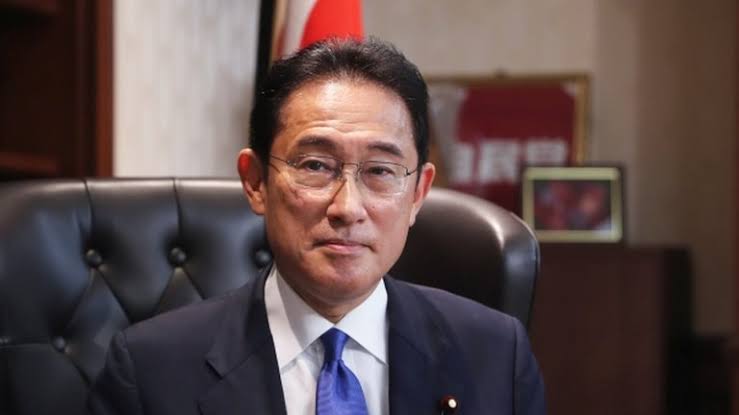

Japanese Prime Minister Fumio Kishida has announced his resignation, set to take effect in September, marking the end of a turbulent three-year term plagued by political scandals.
At a press conference on Wednesday, Kishida revealed his decision not to seek re-election as the leader of the Liberal Democratic Party (LDP), stating that “politics cannot function without public trust.”
Kishida’s term has been marred by various controversies, including allegations of financial misconduct and inadequate responses to rising living costs. His resignation paves the way for a new leader to address these pressing issues and restore public confidence in the government.
“I will now focus on supporting the newly elected LDP leader as a rank-and-file member of the party,” Kishida announced, indicating his commitment to facilitating a smooth transition.
The LDP is expected to elect a new leader soon, who will be responsible for managing both immediate economic concerns and the party’s long-term stability. Reuters reports that Kishida’s decision has triggered a contest to select his successor, who will also become the leader of the world’s fourth-largest economy.
Kishida’s popularity has declined amid controversies related to the LDP’s connections with the controversial Unification Church and unrecorded political donations at party fundraising events. Public dissatisfaction has grown due to stagnant wages failing to keep up with the rising cost of living, even as Japan emerges from years of deflation.
“An incumbent LDP prime minister can only run for re-election if assured of victory. It’s akin to sumo’s grand champion yokozunas; you must win gracefully,” noted Koichi Nakano, a political science professor at Sophia University.
The incoming LDP leader will face the challenge of uniting a divided party while addressing the surging cost of living, rising geopolitical tensions with China, and the potential return of Donald Trump to the U.S. presidency.
Kishida, Japan’s eighth-longest-serving post-war leader, guided the country through the COVID-19 pandemic with substantial stimulus measures and appointed Kazuo Ueda as head of the Bank of Japan (BOJ) to shift away from his predecessor’s aggressive monetary policies. The BOJ’s unexpected interest rate hike in July, aimed at combating inflation, caused market instability and a significant rise in the yen.
Kishida’s resignation could lead to changes in fiscal and monetary policies depending on his successor, according to Shoki Omori, chief Japan desk strategist at Mizuho Securities in Tokyo. “In short, risk assets, particularly equities, are likely to suffer the most,” he said.
Unlike previous administrations, Kishida prioritized policies to boost household incomes, such as wage increases and encouraging share ownership, rather than focusing solely on corporate profit-driven trickle-down economics.
-Advertisement-
Grab our latest Magazine, "Kelechi Amadi-Obi - Transcending the worlds of Law, Visual Art and Photography". Get your order fast and stress free.
For more details about Newswire Law&Events Magazine, kindly reach out to us on 08039218044, 09070309355. Email: newswiremagazine@yahoo.co.uk. You will be glad you did
Download E-MagazineDo you want to be heard, your events covered, your articles published, or need to advertise your products and services on our Blog and Magazine, reach out to us at Newswire Law and Events, you will be glad you did. For more details about our services, please call: 08039218044, 09070309355. Email: newswiremagazine@yahoo.co.uk