
Paulo Alberto da Silva Costa was having a regular day at work as a doorman in Rio de Janeiro when he was arrested in 2020. It was only then that he learned he was a suspect in 62 crimes: almost all were thefts, but there were also two homicide charges. Costa spent three years behind bars before Brazil’s supreme court recognised that it had all been a mistake.
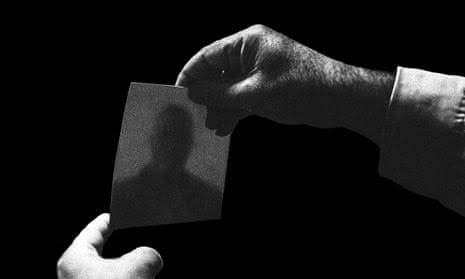
There was one common element: every case relied solely on the fact that a witness or victim had been shown a photograph of Costa, and identified him as the alleged perpetrator.
Such procedures have long been known to reflect racial biases and lead to miscarriages of justice, but they are still commonly used by Brazilian police, and have led to wrongful convictions of countless people, particularly Black people such as Costa. The photos police used of him were selfies taken from his Facebook profile, and to this day, it remains unclear how pictures of a man without any criminal record ended up in a so-called “suspect album”.
“What they did to me was cowardice. They destroyed my life because I’m Black and poor,” said Costa, 37, who lives in Belford Roxo, an impoverished city on the outskirts of Rio de Janeiro.
Although the sheer number of accusations makes his case stand out, it is far from uncommon in Brazil’s judicial system. Last May, a Black man sentenced to 170 years in prison after a conviction based on photo identification was released after spending 12 years behind bars. In 2023 alone, the supreme court overturned 377 wrongful convictions or arrests where the sole evidence was “recognition” by victims, either through photographs or in person.
Despite being extremely common in police stations, suspect albums are unregulated. They range from physical notebooks to digital collections or even cases where officers send a suspect’s photograph directly to the victim via WhatsApp.
There are also no rules on what images can be included in such collections. “There are police officers who monitor social media, looking for young people they think are violent and dangerous, collecting these photos and adding them to suspect albums,” said Pablo Nunes, a political scientist and coordinator of the Centre for Security and Citizenship Studies.
-Advertisement-
Grab our latest Magazine, "Kelechi Amadi-Obi - Transcending the worlds of Law, Visual Art and Photography". Get your order fast and stress free.
For more details about Newswire Law&Events Magazine, kindly reach out to us on 08039218044, 09070309355. Email: newswiremagazine@yahoo.co.uk. You will be glad you did
Download E-MagazineDo you want to be heard, your events covered, your articles published, or need to advertise your products and services on our Blog and Magazine, reach out to us at Newswire Law and Events, you will be glad you did. For more details about our services, please call: 08039218044, 09070309355. Email: newswiremagazine@yahoo.co.uk