
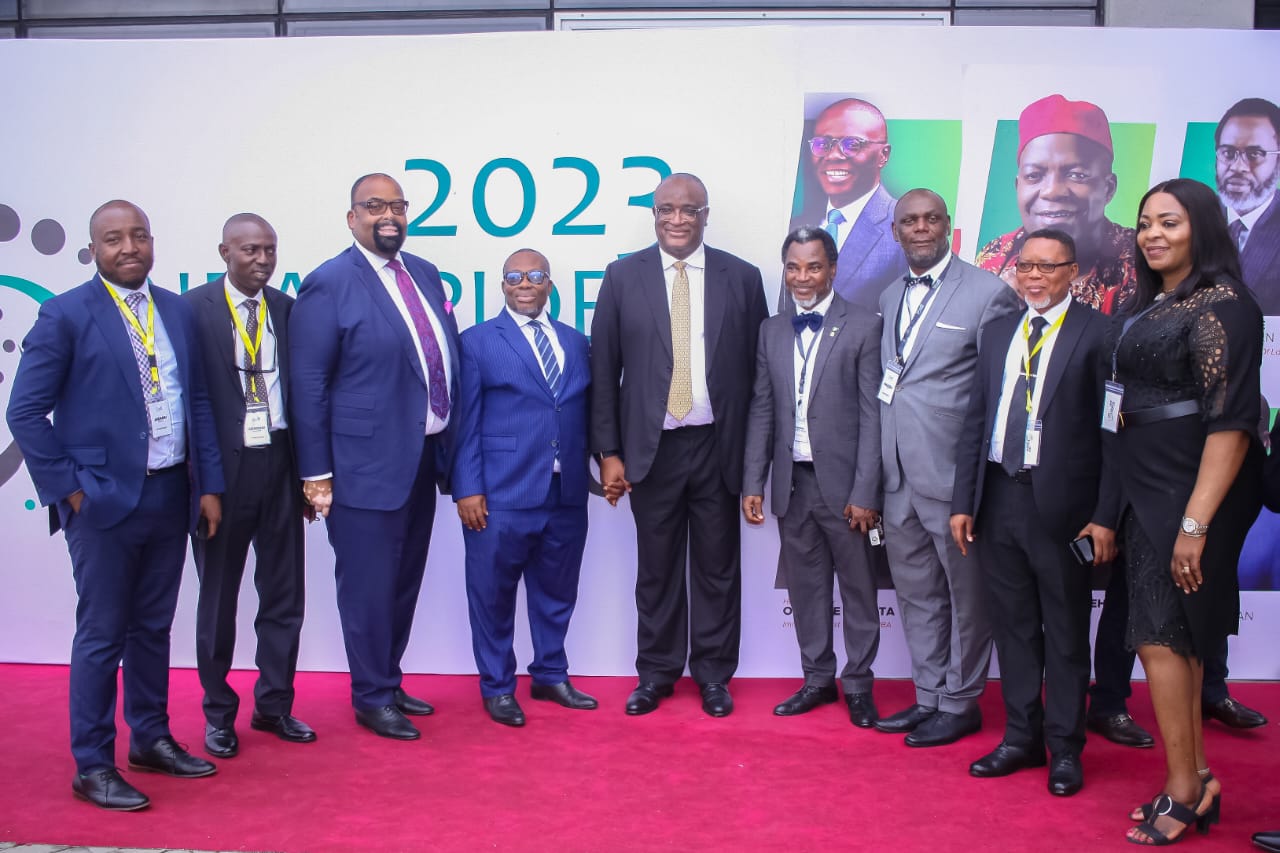


NEWSWIRE Law and Events Magazine correspondent in Ikeja reports that the formal opening of the SPIDEL Conference in Ikeja, Lagos on Wednesday, June 21, 2023, was followed by a Keynote Session led by former NBA President, Dr. Olisa Agbakoba (SAN).
In his preliminary summation, Agbakoba insisted that any attempt to reposition the judiciary for excellence in electoral adjudication must also include addressing what he called the ‘crass incompetence’ of INEC (the Independent National Electoral Commission) as seen in the last election cycle, and the lack of internal democracy in political parties. He also called for the creation of a separate Electoral Offences Commission, saying INEC’s role was simply to conduct elections, nothing more. Even at that, the learned silk added, the Commission was overwhelmed with its multifarious duties – and needs to be unbundled. He concluded by advocating the creation and/or strengthening of legal institutions (such as a Political Parties Regulatory Commission) and the implementation of the Justice Uwais 2007 Report on electoral reform.
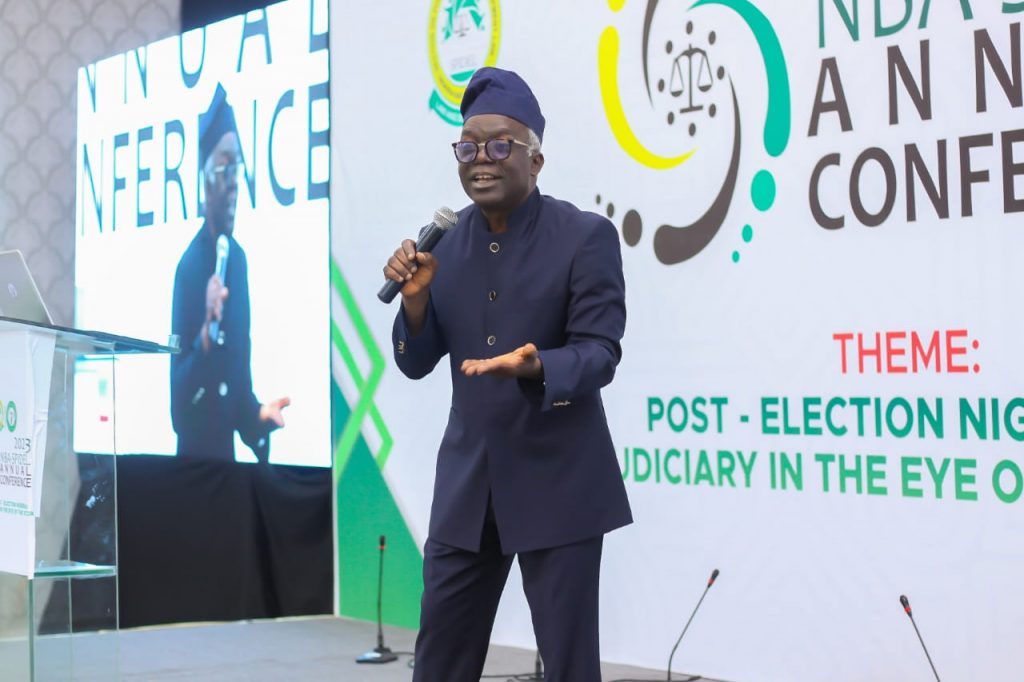
The Keynote Address was a fiery affair indeed – and for good reason, because it was delivered by none other than the human rights and civil society icon, Femi Falana, (SAN). Falana began his rousing presentation by referencing the aforementioned Uwais Report, saying one of its salient provisions was that the President of Nigeria shall not appoint the Chairman of INEC – a provision which, he noted, has so far been observed in the breach. Another provision, also being ignored at present, is that all pending electoral matters should be concluded before the inauguration of a new government. Falana also condemned the practice of giving electoral adjudication precedence over human rights and other pending (and long-standing) cases – as seen in the deployment of whole battalions of judges during this petition season. He called on the NBA to take measures to prevent the executive impunity of the recent past by challenging the new administration of President Bola Tinubu on the rule of law and compliance with court orders.
Turning to the economy, Falana, a former President of the West African Bar Association, condemned the growing ‘dollarisation’ of the Nigerian economy – lamenting the country’s conspicuous absence at the top table of international geo-political shifts designed to bring about a new economic order – such as the recent decision by the BRICS nations (Brazil, Russia, India, China and S/Africa) to conduct trade and other financial transactions among themselves in their respective currencies – rather than in the US dollar. In view of the potential impact of these geo-political shifts on our economic wellbeing as Nigerians, the Senior Advocate called on his colleagues not to be so focused on civil law issues that they ignore weighty economic ones.
In particular, he tasked the NBA on the constitutionality (or otherwise) of recent policies such as the selling off of some of Nigeria’s oil and gas assets by the Federal Government (as if they belonged to the FG and not to the Nigerian people as a whole) as well as the proposed student loan scheme, the proposed increases in electricity tariffs, and the currency floatation policy.
Responses to Falana’s presentation were given by Mrs. Boma Alabi, OON, SAN; Hon. Justice Ipaye of the Lagos State High Court (who stood in for Hon. Justice Amina Augie of the Supreme Court); and Prof. Ernest Ojukwu, SAN.
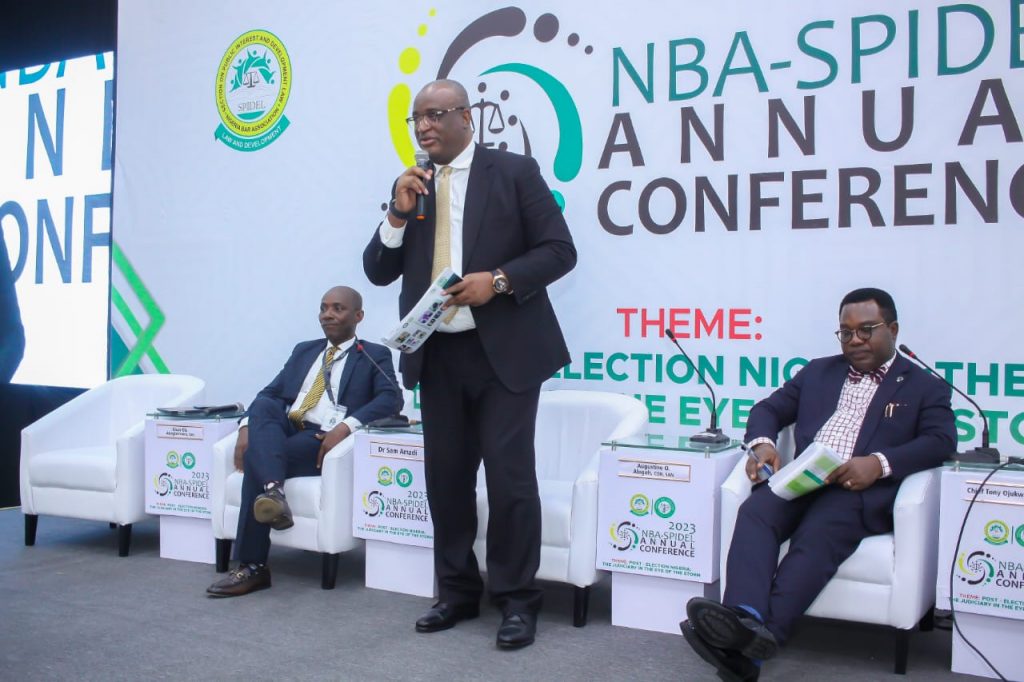
The second panel session of the day explored the theme, ‘Role of the judiciary in the Promotion of Accountable and Transparent Resolution of Election Disputes.’ Chaired by another former NBA President, Augustine Alegeh, SAN, the panel comprised of Dr. Sam Amadi (a law lecturer); Chief Tony Ojukwu, CFR, SAN (Executive Secretary at the National Human Rights Commission); and Hon. Worgu Boms (former attorney general of Rivers State). The session began with a lead presentation by Dr. Amadi, in which he sought to clarify what is (or ought to be) the proper role of courts in electoral matters. This role, he said, was simply to determine the integrity or otherwise of the electoral process, as well as the qualification of contestants, rather than to declare a winner – as obtains at the end of some petitions. He also sought to dismiss the notion that elections, their outcomes and their management are anything other than public interest matters, as they border on the people’s right to decide how they wish to be led. Therefore, these matters should fall under public duty legislation. Amadi therefore called for the strengthening of the regulatory side of INEC’s work.
On the vexed issue of whether or not court proceedings (especially during election petitions) should be televised, Amadi was in favour of live coverage, quoting the saying, ‘Publicity is the best security,’ and citing examples from advanced democracies. Such coverage, he said in conclusion, would expose, for one, what he called ‘the poor logic’ behind some judicial pronouncements.
Further recommendations were also given by Ojukwu, the human rights boss, and by Hon. Boms, the former Rivers AG, who reiterated a point repeatedly made at this Conference, that it is not only the judiciary that is in the eye of the storm – as the Conference theme suggests – but the legal ecosystem as a whole, given the shenanigans of lawyers themselves.
The 3rd and final session of the first full day of the SPIDEL Conference was chaired by former NBA General Secretary, Mazi Afam Osigwe, SAN, who stood in for the retired Chief Judge of Bayelsa State, Hon. Justice Kate Abiri. The panel, which was assembled to explore the topic, ‘ Public Interest Protection and the Place of Ethical Values in the Temple of Justice,’ also had as discussants the outgoing Attorney General of Lagos State, Moyosore Onigbanjo, SAN; Austin Chiefo Ejiofobiri(an executive at Fidelity Bank Plc) ; Janet Gbam of the Center for Human Rights at the University of Pretoria, S/Africa; Dr. Idachaba Martins Ajogwu of the Kogi State University; and Benson Iwuagwu, Executive Director at the Prison Fellowship of Nigeria.
In his contribution, Onigbanjo expressed the opinion that both the Bench and the Bar are equally challenged when it came to upholding ethical values, and called for a more strenuous disciplinary regime that would enforce the notion that there will always be consequences for wrong behavior. That regime, he lamented, has collapsed completely because of the lack of appropriate sanction for misdemeanours, however grave. He therefore called for a ‘reboot’ of the regime by: a) amending the disciplinary rules which at present are not fit for purpose; b) decentralizing the operation of the Legal Practitioners Disciplinary Committee (LPDC) to make them less cumbersome; c) deploying the use of technology (including artificial intelligence, or AI, in a more robust and intentional manner).
In his rather heart-wrenching intervention, Ejiofobiri began by asking, ‘ Where is the address of the temple of justice? ‘He told the assembled conferees of his infant son’s death back in the early 2000s – no thanks to the negligence of various medical personnel, which was compounded by a doctor’s strike. Having considered the various legal options open to him at the time – he said he dismissed them all as ultimately futile, considering the hurdles he would have had to navigate in order to get justice for his son. Hence his question about the address of the proverbial temple of justice. What SPIDEL and other public interest advocates do, going forward, he said, would determine whether the Nigerian people would locate, and access, said temple.
Responding to Ejiofobiri’s question, Janet Gbam (who spoke virtually from her S/African base) said the temple of justice was located in the heart and mind of each and every stakeholder – namely, in the desire of every stakeholder to do the right thing, regardless of reward or consequences.
The panelists agreed that re-injecting a healthy dose of ethics into the practice of jurisprudence would be a tall order in a society like Nigeria, but that if the Bench and the Bar would make it a priority to scale up, and be more competitive, especially in these days of disruptive new technologies (including social media, where, in the words of Ejiofobiri, the temple of justice seems to have its new location) then all is not lost.
NEWSWIRE’s correspondent at the Citadel reports that the first full day ended on that note – save for the social and networking interactions that went on in other locations in Ikeja well into the night.
The Conference continues on Thursday, June 22, 2023 with more panel discussions and other engagements.




-Advertisement-
Grab our latest Magazine, "Kelechi Amadi-Obi - Transcending the worlds of Law, Visual Art and Photography". Get your order fast and stress free.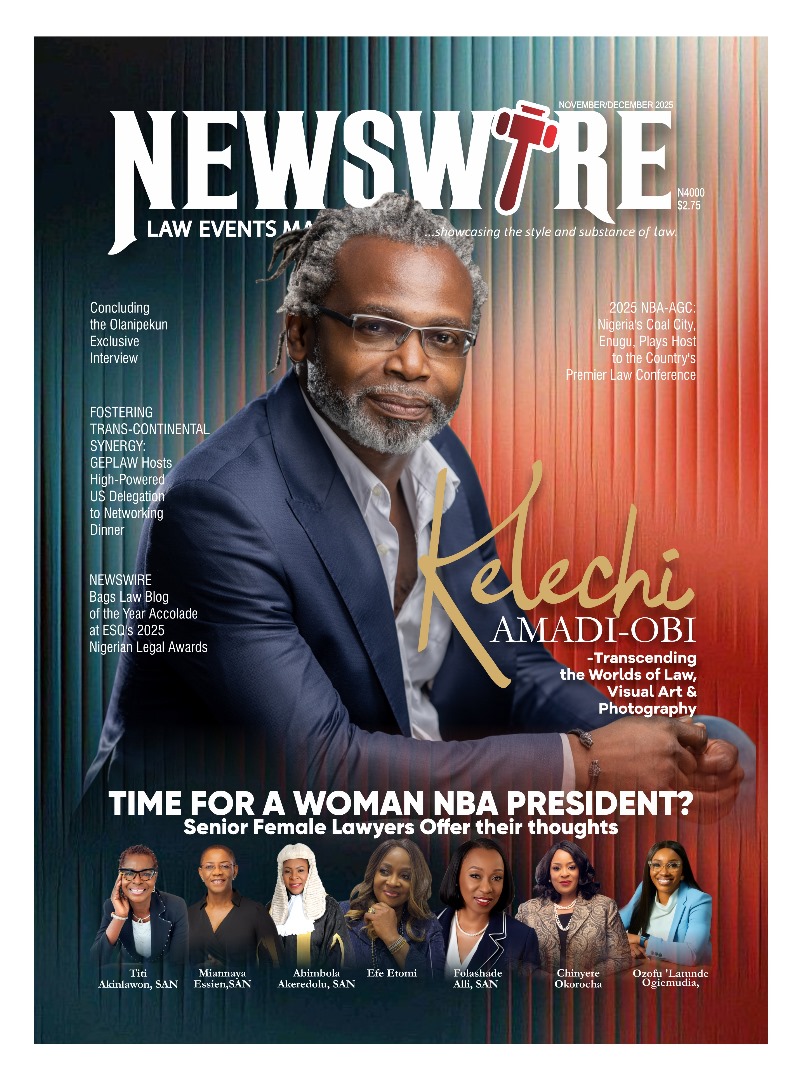
For more details about Newswire Law&Events Magazine, kindly reach out to us on 08039218044, 09070309355. Email: newswiremagazine@yahoo.co.uk. You will be glad you did
Download E-MagazineDo you want to be heard, your events covered, your articles published, or need to advertise your products and services on our Blog and Magazine, reach out to us at Newswire Law and Events, you will be glad you did. For more details about our services, please call: 08039218044, 09070309355. Email: newswiremagazine@yahoo.co.uk